

Supercharged – 1935 Auburn Speedster
by James Howe on Jun.08, 2011, under Automotive
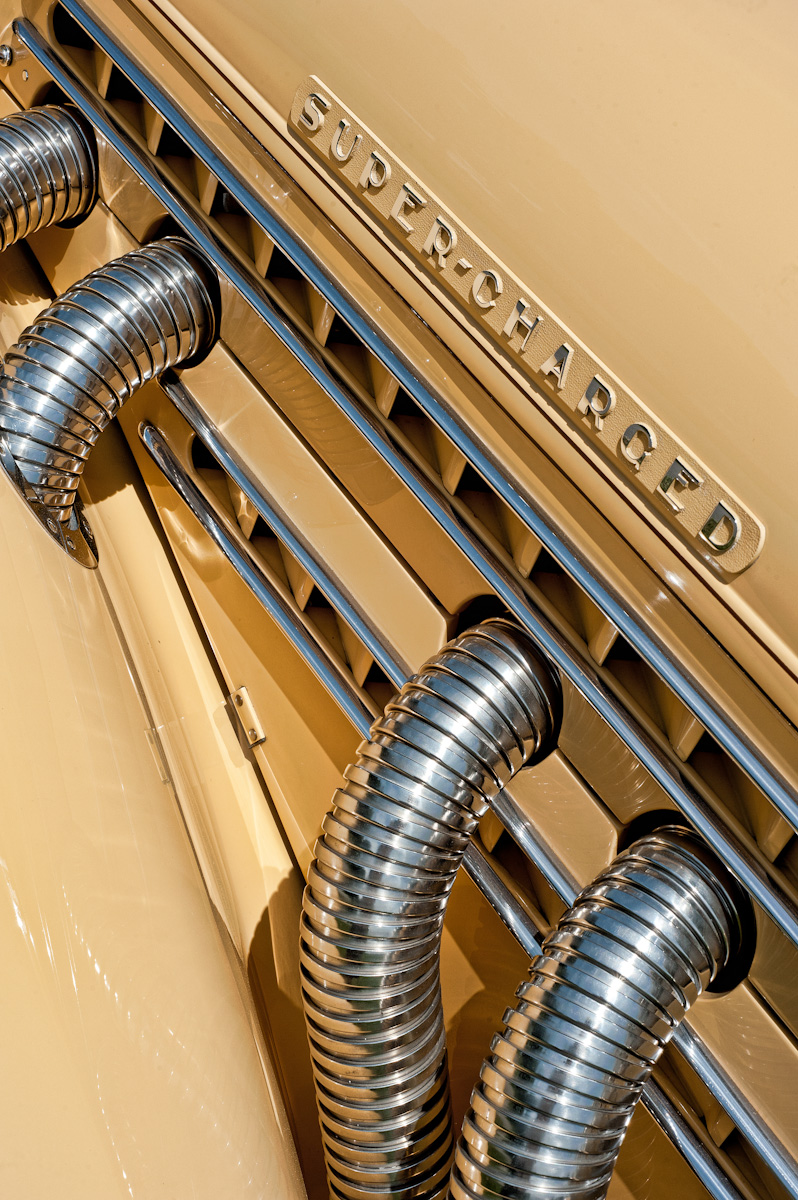
(Nikon D700, 50mm f1.8, ISO 200, Exposure 1/250 sec @ f/16)
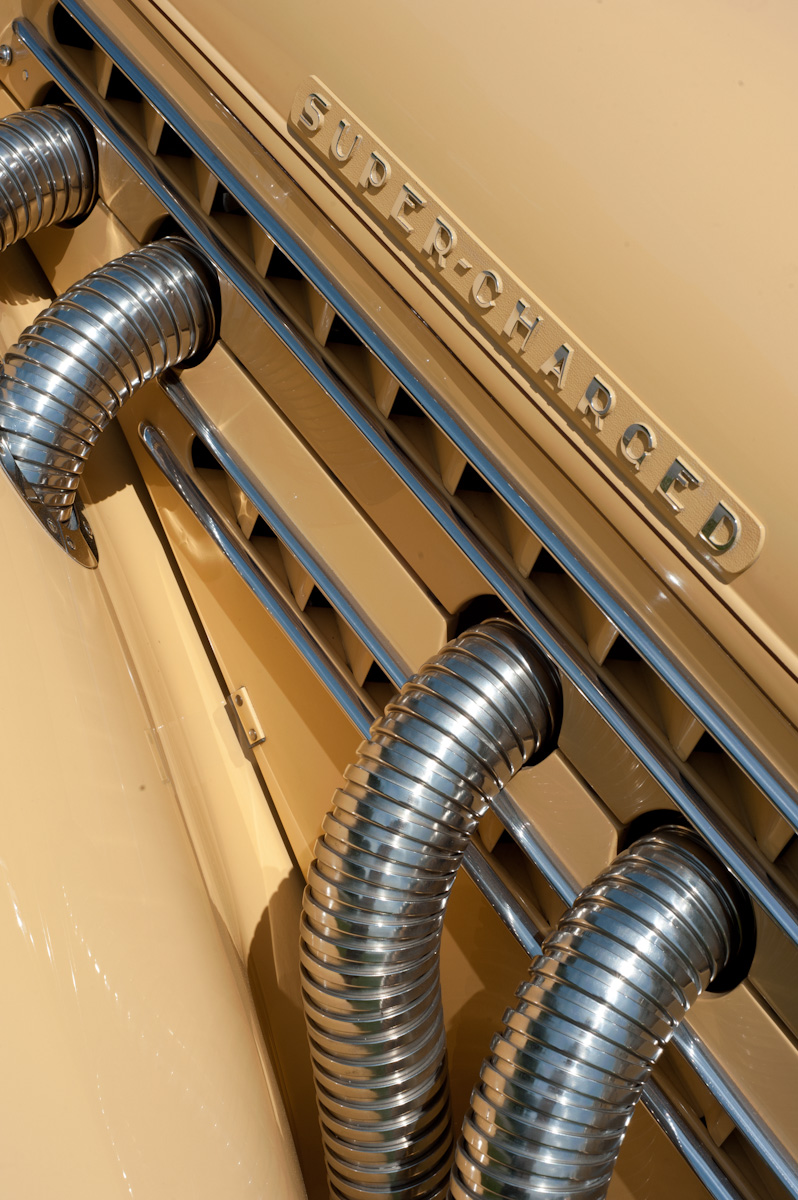
No moody black and white image today, just a simple color shot of a wonderful automobile. This shot shows the exhaust pipes of a 1935 Auburn Speedster. The Auburn was manufactured in Auburn, Indiana and was noted in its day for being a high performance automobile. Before a customer received their automobile, it was certified to have been tested to 100.8 Miles Per Hour by Ab Jenkins a professional race car driver known for setting speed records at the Bonneville Salt Flats in Utah. I’ve always liked the look of the Auburn Speedster. There is something about the chrome pipes coming out of the engine that just looks cool and exudes speed.
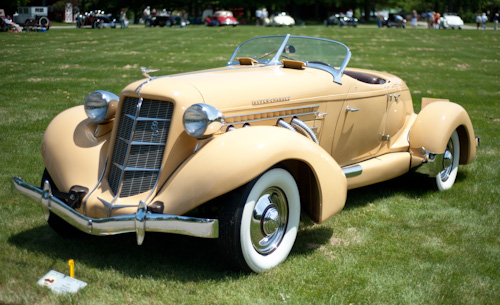
Here is a full body shot of the Auburn. I screwed up when I took this shot because I had my aperture set to f1.8 which meant that much of the car was out of focus.
There wasn’t much processing done to the finished image. I made some minor exposure tweaks in Lightroom and used Topaz Adjust to pull out a little bit more of the fine details in the image.
Hope you enjoy it!
Copyright © 2011 James W. Howe – All rights reserved.
Stick Shift – 1937 Cord Phaeton Interior
by James Howe on Jun.07, 2011, under Automotive
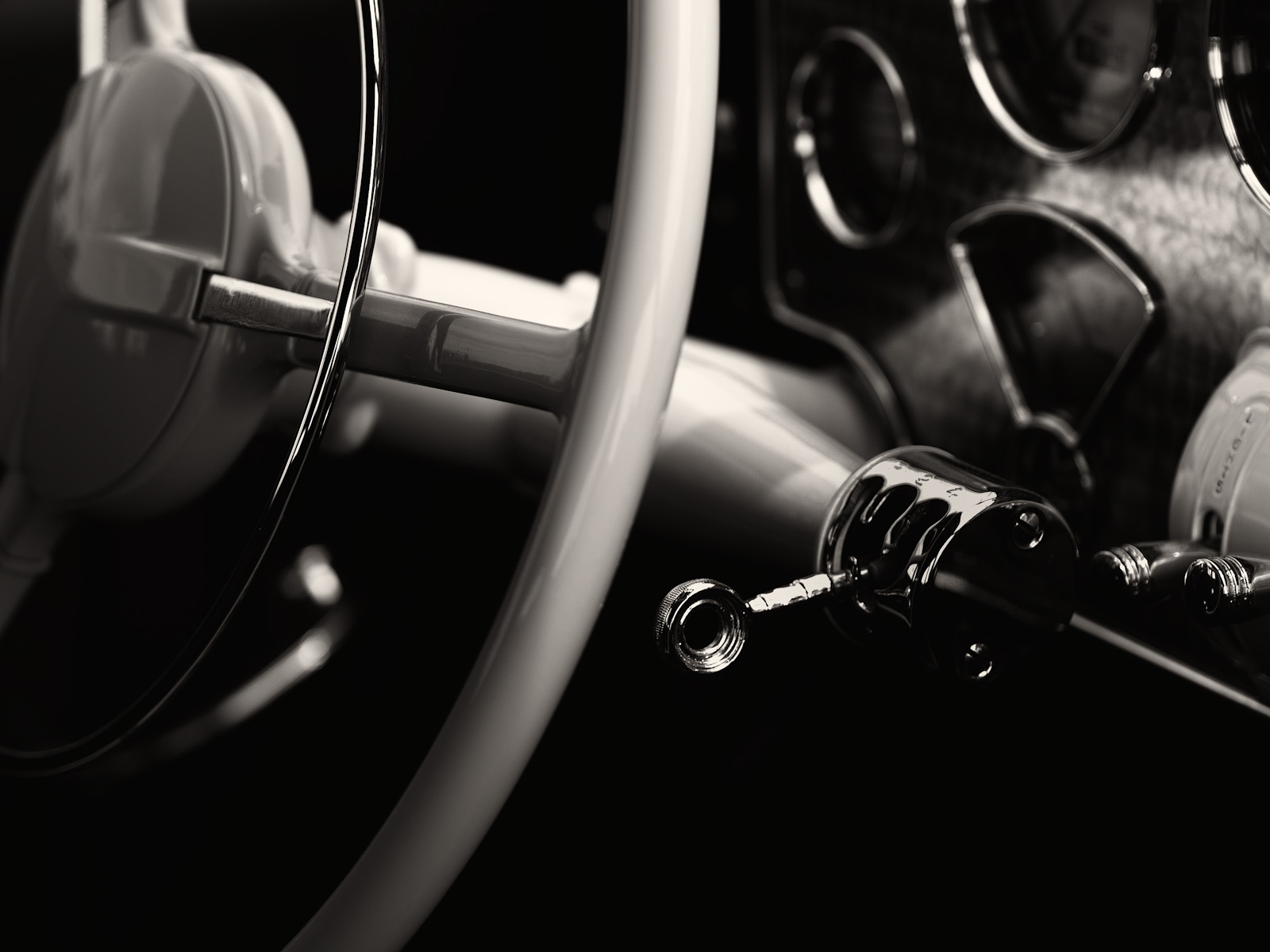
(Olympus E-3, 50mm Macro Zuiko (2x crop factor), ISO 100, Exposure 1/800 sec @ f/2.8)
When I went to the Classic Car Club of American car show at the Gilmore Car Museum I took both of my camera bodies. I’ve been using primarily my Nikon D700, but I still use my Olympus E3 on occasion. I had equipped the E3 with my 50mm F2 Zuiko Macro lens, an old manual lens that I used to use with my Olympus OM4 back in my film days. It was a nice change to use a completely manual set up. Focusing was manual, as was setting the aperture. When I changed aperture, the lens closed down and made the viewfinder darker, which made focusing a little more challenging. I like this 50 macro on the E3 because at the 2x crop factor its like using a 100mm lens. This lens also takes really nice images.
The shot itself shows the interior of a 1937 Cord 812 Phaeton, the same car that was the subject ofyesterday’sposting. I had made the rounds of the show using the wider zoom on my Nikon and switched to the Oly to make another pass to get some closer shots at large aperture. The window of the car was open so I was able to carefully lean in to the car to get the shot, making sure not to actually touch the car. I really like the interiors of these cars as the had some great details. This one has a wonderful metal dashboard with great chrome details.
There isn’t too much difference between the as shot image and the final image. I wanted to go for a very contrasty shot, but something with a film noir feeling to it. I liked the way the shaft of light illuminated the dashboard and the chrome of the shifter. Conversion was done in Silver Efex Pro 2 and I applied a light selenium toning to the final image.

Hope you enjoyed it. Feel free to leave feedback below.
Copyright © 2011 James W. Howe – All rights reserved.
Smooth Lines – 1937 Cord Phaeton
by James Howe on Jun.06, 2011, under Automotive
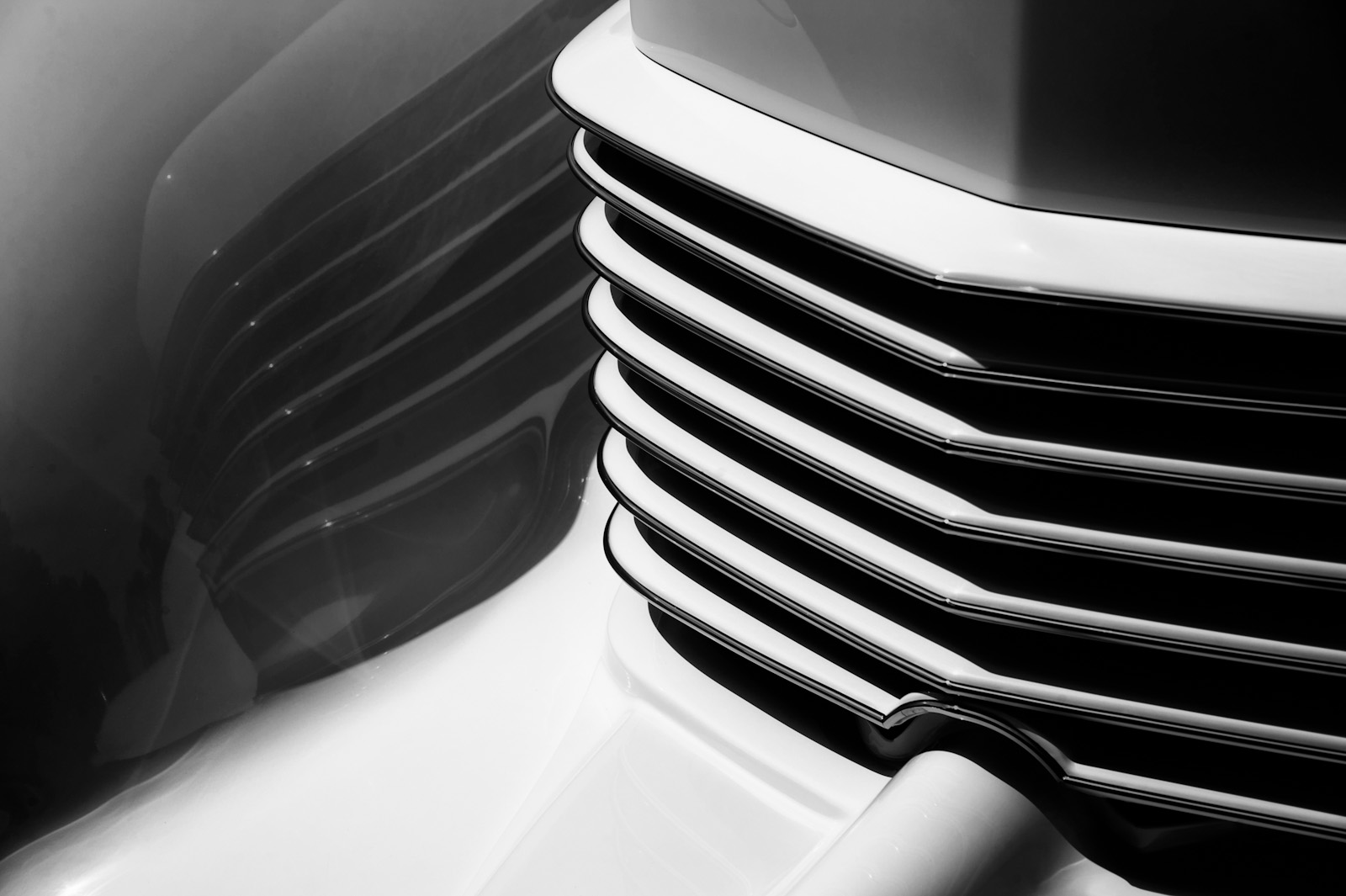
(Nikon D700, 28-300mm at 122mm, ISO 200, Exposure 1/500 sec @ f/11)
This past weekend I had the opportunity to visit the Gilmore Car Museum for the annual Classic Car Club of America show. This year the show highlighted cars manufactured in Indiana. One of the key companies in Indiana was the Auburn Cord Duesenberg automobile company which manufactured cars in Auburn, Indiana. These cars are some of my favorite because they had such interesting designs. I particularly like Auburns and Cords. At the show, this car was referred to as a ‘1937 Auburn Phaeton’, but the car is actually a Cord, probably a model 812 (although I suppose it is possible that it was marketed as an ‘Auburn’, some car buff will certainly correct me if I’m wrong) Late model Cords have a distinctive design created by legendary automobile designer Gordon Buehrig. The front end has a shape somewhat like that of a coffin so these cars are sometimes referred to as ‘coffin nosed Cords’. Anyway, I love the design and I love to take pictures of this line of cars.
Initially my thought was to simply do minimal processing on this image. I like the color version. I think the car has a nice color and I think the image highlights the elements that make the car so distinctive. However, I also wanted to see if I could produce an image which emphasized the lines in a stronger fashion. Naturally I thought of converting to black and white. I used Silver Efex Pro 2 and flipped through some of the presets until I found one that I thought came close to what I wanted. I was looking for something with high contrast but done in a clean manner. The conversion to black and white really highlighted some dust and other paint imperfections on the surface of the car, so I actually used Topaz Simplify along with the healing brush to smooth these out.
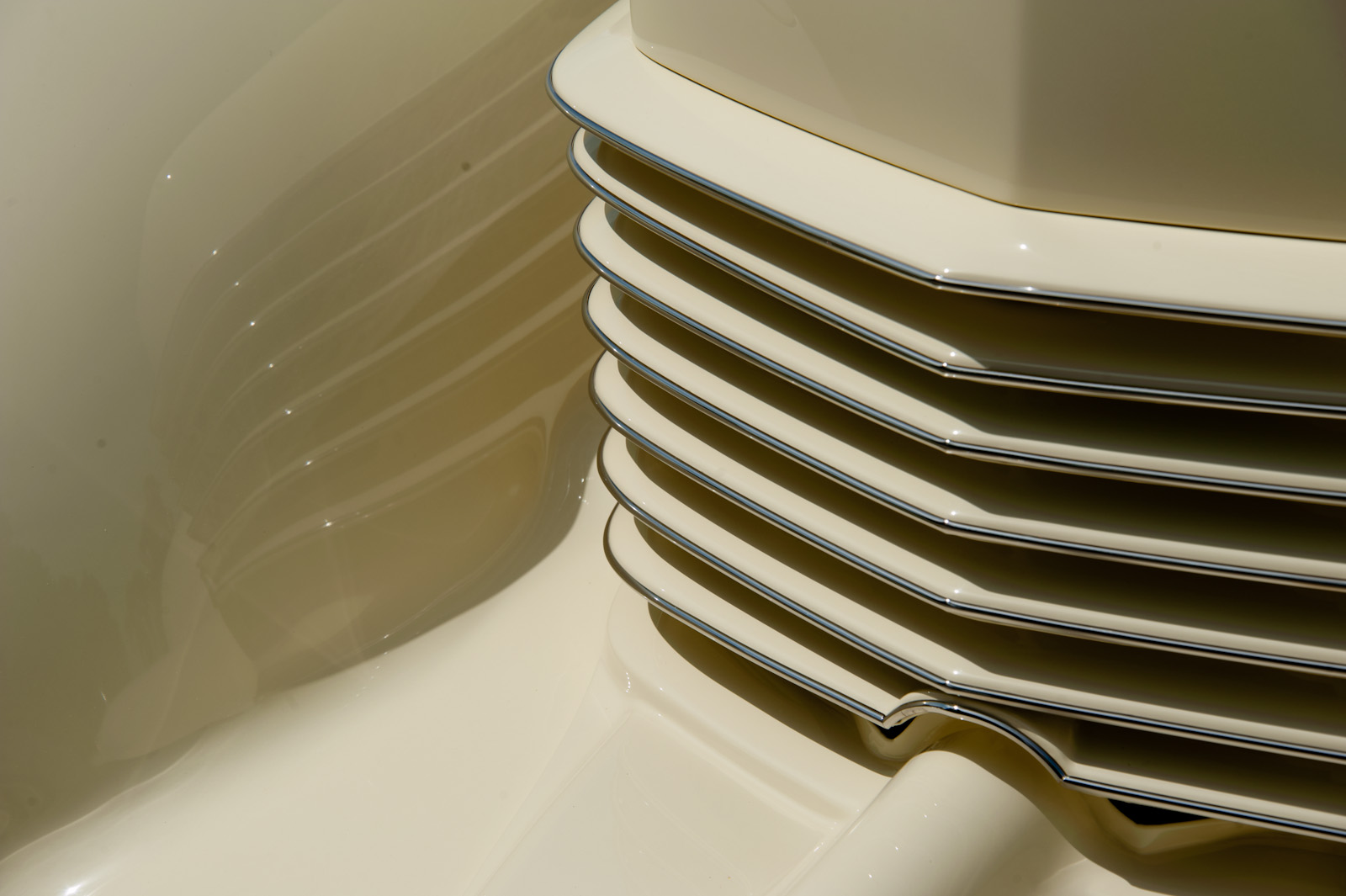
Which do you prefer? The black and white, or the color version? Let me know what you think.
Copyright © 2011 James W. Howe – All rights reserved.
Shell Service Station – Gilmore Car Museum
by James Howe on Jun.03, 2011, under Michigan
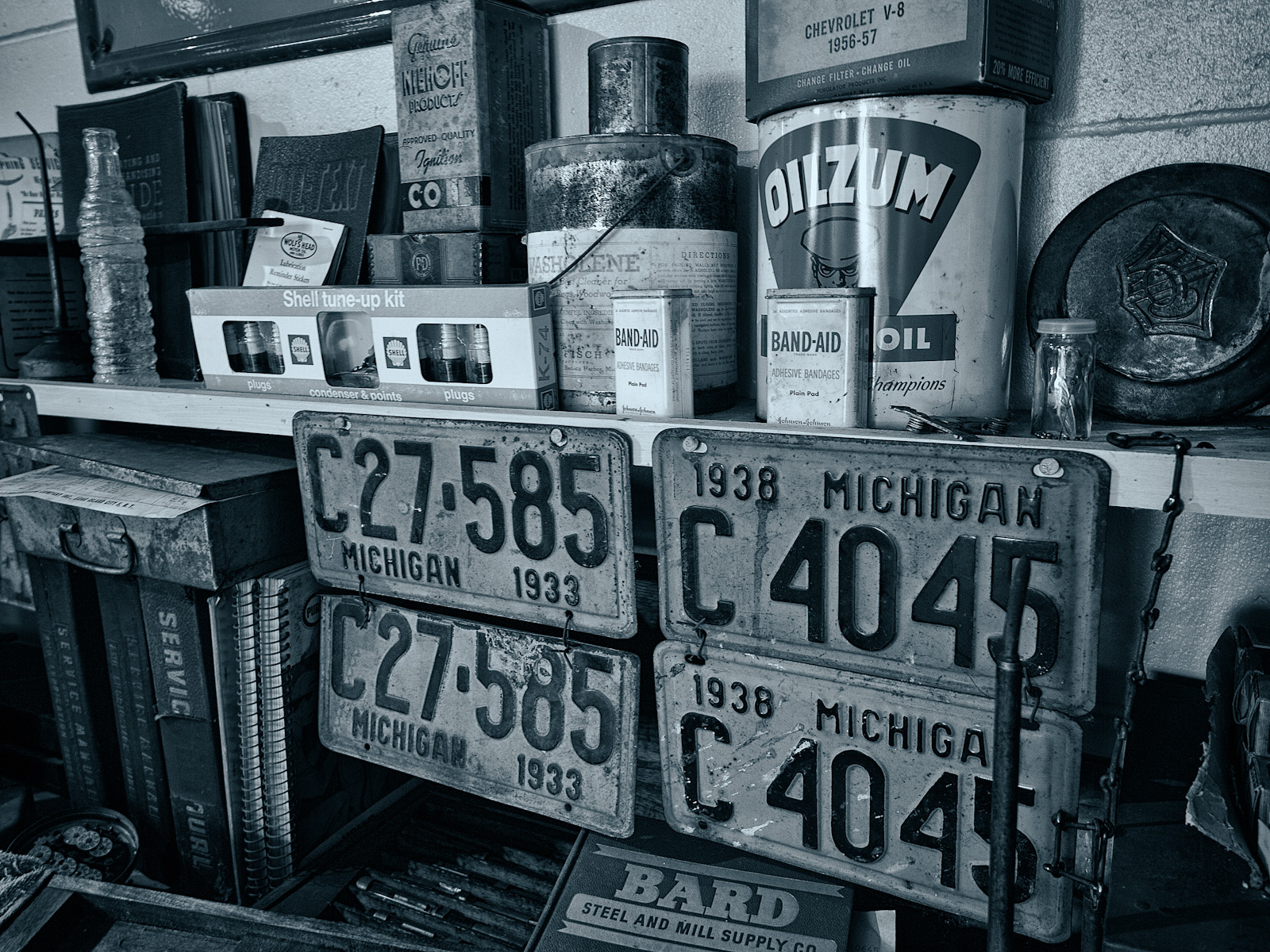
(Olympus E3, 7-14mm at 14mm (2x crop factor), ISO 100, Exposure 1/6 sec @ f/4)
This picture was taken a couple of years ago at the Gilmore Car Museum near Kalamazoo, Michigan. The museum is a great place to see cars throughout the ages. The museum sits on a large piece of farmland and has several barns which house the cars. They have been adding to the museum over the years. Last year they opened a new building dedicated to Franklin automobiles. The Classic Car Club of America has a barn as well. The museum continues to expand it’s collection and is a great place to visit if you like automobiles and automobile history.
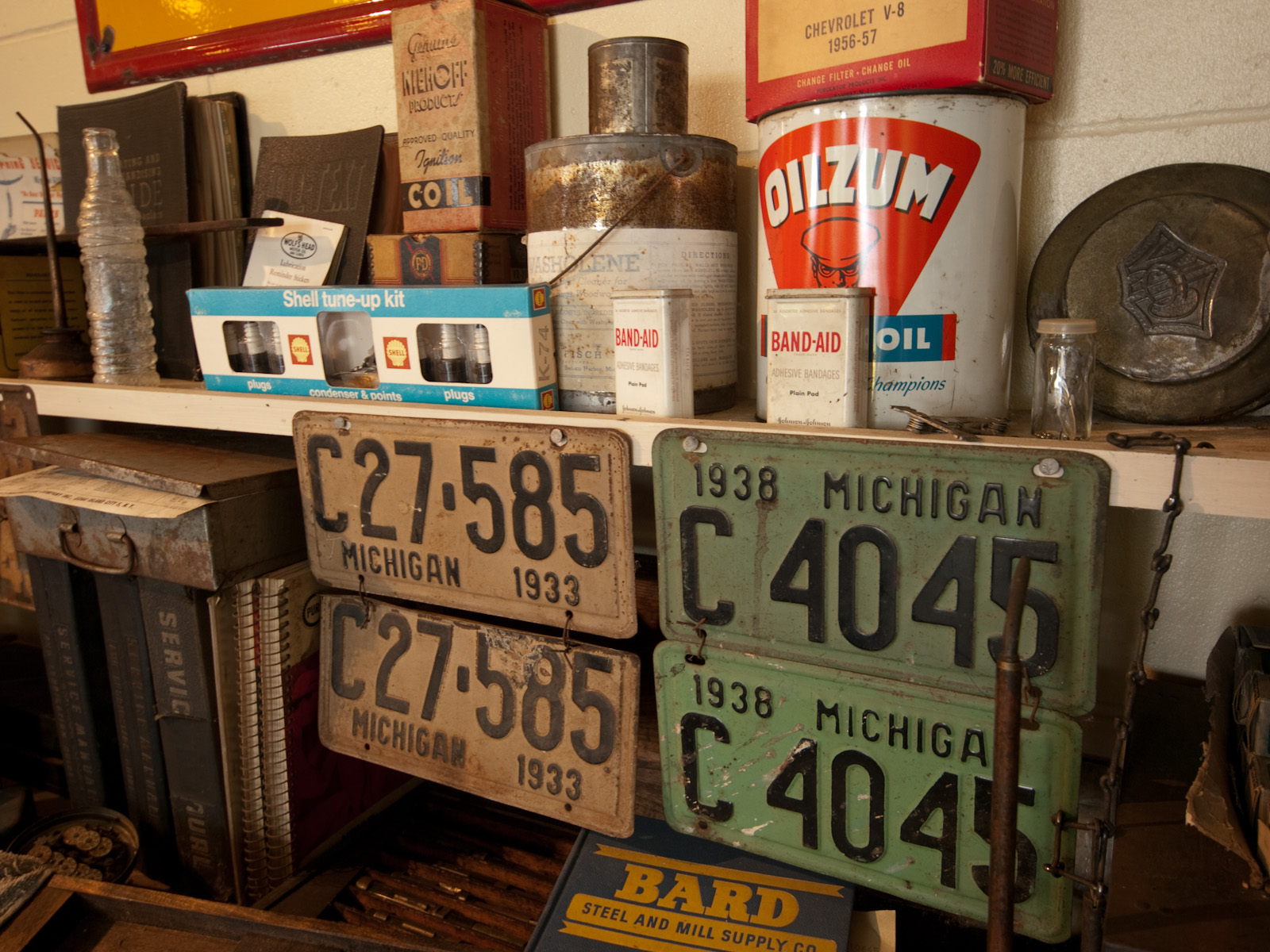
I took this shot when I visited the museum for one of their car shows. The museum has a replica of an old Shell gas station and they’ve stocked it with vintage service station objects. I have a thing for old stuff, so I just had to get some shots from inside the service station. I took this picture with my Olympus E3 and one of my favorite Zuiko lenses, the 7-14mm. I think this shot shows the usefulness of in camera stabilization. I took the shot at 1/6 sec handheld, but the image is still sharp. I don’t shoot much with my Oly any more since I switched to Nikon. Had to sell the 7-14mm as well to help fund other purchases.
Processing was fairly straight-forward. I knew from the start that I wanted to create a black and white image, so I immediately took the image into Silver Efex Pro2. The neutral conversion made areas too dark so I increased the brightness of some of the darker areas. I also wanted to see the fine details in the shot, so I increased the structure as well. I selected the blue filter option to make the reds a bit darker and then I adjusted the strength of the filter. I also selectively tweaked the color sensitivities until things like the red label on the ‘Oilzum’ can came out the way I wanted. I finished the image off with a cyanotype toning.
This weekend the Classic Car Club of America is hosting an event on Sunday and, weather permitting, I plan on heading over to the museum to check out the show and to see what’s new at the museum. I expect that I’ll be posting some shots from that trip next week.
Got comments or questions? Feel free to leave them below.
Copyright © 2009-2011 James W. Howe – All rights reserved.
Michigan Bean Elevator – Henderson, Michigan
by James Howe on Jun.02, 2011, under Michigan
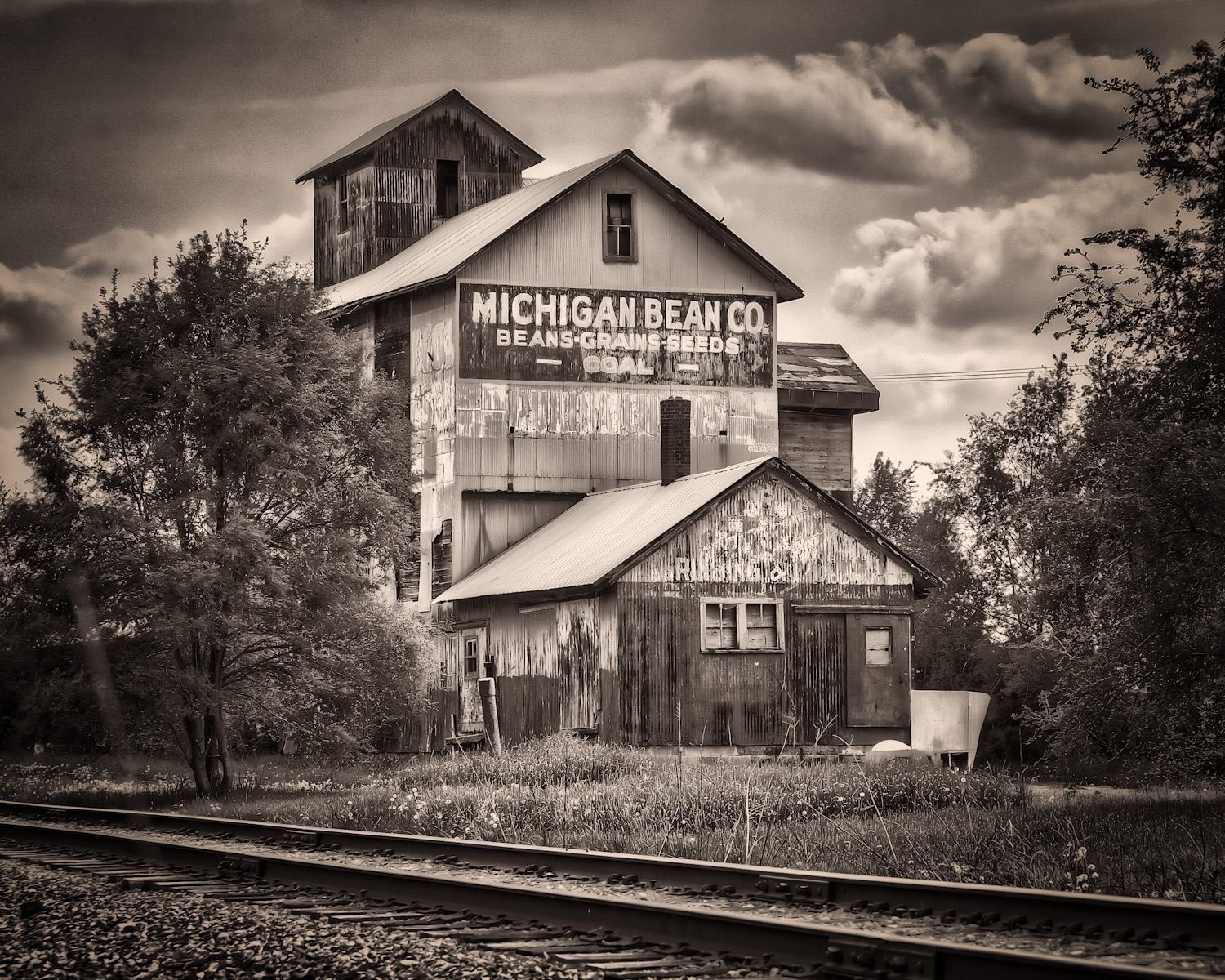
(Nikon D700, 70-300mm at 82mm, ISO 200, 7 exposures sec @ f/8.0)
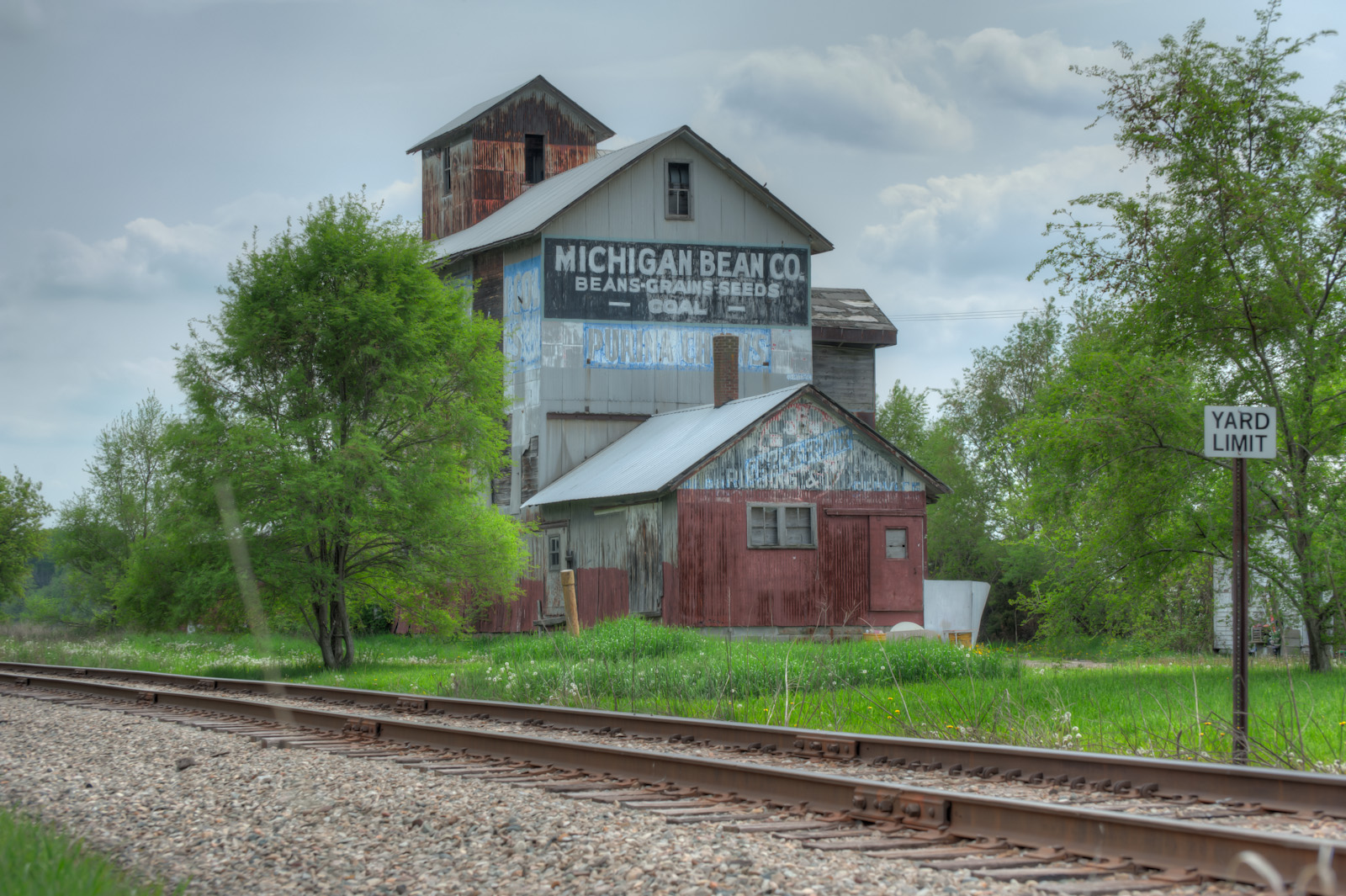
A couple of weeks ago Mike Olbinski, a photographer I follow, posted this shot of a grain elevator that he found while driving through Kansas. This got me in the mood to find some interesting elevators in Michigan, since Kansas is quite a ways away for me. I did some scouting on Flickr and managed to find a couple of good possibilities. One was a local elevator in Ypsilanti, Michigan which I posted last week. The other one was this old elevator in Henderson, Michigan. What I liked about this one was the decay and faded paint job. If you look carefully, you can see old signage for ‘Purina Chows’ and other products that were available at this location.
I took several shots of the elevator, mostly 7 exposures at a time, thinking I might want to create an HDR image. After running the shots through Photomatix, I wasn’t too thrilled with the color version but I tried some further adjustements in Photoshop using PhotoTools and other adjustment layers to see if I could get a color image that I liked. I didn’t come up with anything so I decided to take the image into Silver Efex Pro 2 and work on a black and white version. You can see the mostly raw HDR image below (I toned down the greens in Lightroom after the Photomatix processing) The one thing the HDR processing did for me was to bring out the clouds in the sky. Given the position of the sun at the time, if I got the exposure right for the building, the sky was too bright and vice versa. The HDR allowed me to get both. I might experiment with using just two of the images, using the sky from one and the building from another to see if I can get a better finished image. Even though I took this shot with my camera on a tripod, it was windy that day and there was just a bit of camera movement. The end result is that the image isn’t quite as sharp as I would have liked. Also, the HDR processing increased the noise level. It’s not terrible, and I’ll have to see what it looks like when printed, but using a two image blend would eliminate the noise issue.
Got feedback? Leave it below!
Copyright © 2011 James W. Howe – All rights reserved.